Showing posts with label Byzantium. Show all posts

Tuesday, 30 March 2010

Greece and Turkey Boast Two of the World’s Top 2009 Archaeology Discoveries

Greece and Turkey Boast Two of the World’s Top 2009 Archaeology Discoveries


BalkanTravellers.com

30 March 2010 | Two archaeological sites, one in Crete and one in Istanbul, were included in the list of last year’s most exciting discoveries compiled by the Archaeology Magazine, a publication of the Archaeological Institute of America.

The discovery of the Iron Age necropolis of Orthi Petra at Eleutherna in Crete, which was featured among the year’s top 10 finds, shed light on the role of women in the so-called “Dark Ages” of Greece.

The remains of four females, aged between seven and 70, were excavated last summer in an eight-century BC tomb, whose floor was covered with thin strips of gold, once affixed to burial garments. The women were surrounded by bronze vessels and figurines, as well as jewellery made of gold, silver, glass, ivory, and semiprecious stones imported from Asia Minor, the Near East, and North Africa.

These and other artefacts discovered in the tomb suggested these women played an important role in Eleutherna's religious life, and the head of excavations, Nicholas Stampolidis of the University of Crete, believes the oldest one was a high priestess interred with her protégés.

Based on a shared dental trait, archaeologists discovered that all four women were related and further research is expected to confirm they were related to a dozen women unearthed nearby last year.

“This time period is erroneously called the Dark Ages,” Adelphi University forensic anthropologist Anagnostis Agelarakis said, cited by the publication. “The finds show that these women were aristocratic. Their social standing was superlative. I mean, the phiale alone--it must have been sent from a ‘prince’ of Mesopotamia! And their matrilineage was not ruptured for two centuries. I don't think it was dark at all.”

While the Eleutherna find was the only archaeological site on the Balkans listed among the world’s top 10 most exciting discoveries for 2009, another place in the region was also included as a significant discovery for the year.

This was the Lost City in Istanbul. Described as “too big to classify,” the site stretches over eight kilometres and includes several separate sites from various periods. With its main part being on the peninsula that juts out into the Küçükçekmece lagoon, now separated from the Sea of Marmara by a narrow strip of land, but there are also remains on the surrounding shores of the lagoon and in the lagoon itself.

Some of the sites identified so far are: two harbor installations and kilometers of seawall from the classical period; a harbor, with a long breakwater and a lighthouse, most likely from the fourth century BC; Hellenistic pottery and a second-century BC Corinthian column capital; a wide and well-paved Roman roadway that excavators believe is part of the imperial Via Egnatia; a necropolis and likely residential areas, as well as possible villa remains on the eastern shore of the lagoon.

In addition, finds similar to the artifacts discovered in the central Anatolian late Pre-Pottery Neolithic site, which began around 9500 BC were made. If they turn out to be from the same period, archaeologists say the site at Küçükçekmece could be one of the earliest farming communities settled by people moving from Anatolia into Europe.

As Küçükçekmece is located just 20 kilometres from downtown Istanbul on land that is currently being farmed, the publication suggests turning the area into an archaeological park.

The other top 10 archaeological discoveries for 2009, according to the publication included: the Lord of Úcupe in Peru; the First Domesticated Horses in Botai, Kazakhstan; the Early Irrigators in Tucson, Arizona; the Anglo-Saxon Hoard in Staffordshire, England; the Popol Vuh Relief in El Mirador, Guatemala; the World’s First Zoo in Hierakonpolis, Egypt; the Earliest Chemical Warfare in Dura-Europos, Syria; the Palace of Mithradates in Kuban, Russia; and the Rubaiyat Pot in Jerusalem, Israel.

Source: Balkantravellers

Monday, 29 March 2010

Bricks and mortar preserve Hagia Sophia from Earthquakes

Τούβλα και κονίαμα σώζουν την Αγία Σοφία από σεισμό

Της Μαίρης Αδαμοπούλου

ΔΗΜΟΣΙΕΥΘΗΚΕ: Δευτέρα 29 Μαρτίου 2010
Ακόμη κρατά πολλά  κρυμμένα μυστικά ο  «ναός των ναών»,  καθώς  έχουν  διερευνηθεί μόλις  238 μ. των  υπόγειων στοών  του, αλλά όχι και  οι  δεκάδες  διακλαδώσεις τους,  ώστε να αποδειχθεί  αν ισχύει ο θρύλος   που θέλει την Αγία  Σοφία να συνδέεται  με τα  Πριγκιποννήσια, τη   Βασιλική Στέρνα,  τον Ιππόδρομο και  το Μεγάλο Παλάτι
Δύο αντισεισμικά μυστικά του ναού - συμβόλου της Κωνσταντινούπολης αποκαλύπτει νέα έρευνα που υλοποιήθηκε με ελληνική συμμετοχή
Τούβλα δώδεκα φορές πιο ελαφρά από τα συνηθισμένα και ειδικά κονιάματα είναι τα δύο μυστικά που προσέφεραν αντισεισμική προστασία στην κορυφαία δημιουργία της βυζαντινής αρχιτεκτονικής, την Αγία Σοφία, και της επιτρέπουν να αντέχει σεισμό τουλάχιστον 7 ρίχτερ.

«Καταφέραμε μέσα από τα υλικά να διαβάσουμε τα μυστικά των βυζαντινών μαστόρων», λέει στα «ΝΕΑ» η καθηγήτρια του Εθνικού Μετσόβιου Πολυτεχνείου Αντωνία Μοροπούλου, η οποία παρουσίασε τα αποτελέσματα μακρόχρονης έρευνας που πραγματοποιήθηκε από τα πανεπιστήμια του Πρίνστον των ΗΠΑ, του Μπογάζιτζι της Τουρκίας και από το ΕΜΠ στην έκδοση που υπογράφει υπό τον τίτλο «Η ελληνική συμβολή στη συντήρηση της Αγίας Σοφίας», την οποία εξέδωσε το Τεχνικό Επιμελητήριο Ελλάδος.

Πρώτες ύλες από τη Ρόδο και ειδική τεχνική από την Ανατολή συνδυάστηκαν για να δημιουργηθούν οι οπτόπλινθοι στον σημερινό, δεύτερο, τρούλο της Αγίας Σοφίας, καθώς ο πρώτος κατέρρευσε από σεισμό. Για να αποδειχθεί ο θρύλος που ήθελε τα τούβλα του τρούλου να κατασκευάζονται με ειδική παραγγελία, οι ερευνητές συνέκριναν τα δομικά υλικά της Αγίας Σοφίας με σύγχρονα κτίσματα από την Πόλη και τη Ρόδο. Τα αποτελέσματα έδειξαν πως κατά 95% οι πρώτες ύλες προέρχονται από τη Ρόδο, είναι εμπλουτισμένες σε άργιλο και μπορούν να δώσουν οπτόπλινθους συμπαγείς και με υψηλή αντοχή. Όσο για την τεχνική όπτησης (ψησίματος των τούβλων) έχει τις ρίζες της στην Ανατολή όπου η συγκεκριμένη τεχνογνωσία ήταν ιδιαιτέρως αναπτυγμένη.

Δεύτερο αντισεισμικό μυστικό της Αγίας Σοφίας ήταν τα κονιάματα από ημι-αποκρυσταλλοποιημένο υλικό που έχει την ιδιότητα να απορροφά την ενέργεια του σεισμού, εξηγεί η κ. Μοροπούλου. Τα κονιάματα αυτά μάλιστα, αφού αναλύθηκαν, ξαναγεννήθηκαν βελτιωμένα στα εργαστήρια. Το αποτέλεσμα ήταν να αντιδράσουν πολύ ικανοποιητικά στον σεισμό του 1999 (είχαν τοποθετηθεί στο μνημείο λίγους μόλις μήνες προ του μεγάλου σεισμού στην Τουρκία) ενώ εκτιμάται πως η σύνθεση και η ιδιοσυστασία του υλικού μπορούσε να αντέξει 7 ρίχτερ.

Εκτός από τα αντισεισμικά μυστικά, η έρευνα έχει εντοπίσει χαμένα ψηφιδωτά στο εσωτερικό της Αγίας Σοφίας. Ήδη μέσω διασκόπησης εντοπίστηκε και αποκαλύφθηκε το πρόσωπο ενός χερουβείμ στην αριστερή πλευρά του Ιερού, ενώ αναζητάται ακόμη ένα πρόσωπο χερουβείμ στην απέναντι πλευρά, νοτιοανατολικά του Ιερού.


Υποκίτρινη και όχι κοκκινωπή

Λανθασμένη είναι η εικόνα που έχουμε σήμερα για την Αγία Σοφία. Το κόκκινο επίχρισμα στην εξωτερική της επιφάνεια απέχει κατά πολύ από το χρώμα των Βυζαντινών και κάλυψε τον ναό μετά την Άλωση, αναφέρει η καθηγήτρια του ΕΜΠ Αντωνία Μοροπούλου. Το αυθεντικό χρώμα της όψης δεν διαφέρει από τις υπόλοιπες βυζαντινές εκκλησίες: υποκίτρινο και κόκκινο του τούβλου και ξαναβγήκε στην επιφάνεια όταν από το 1994 άρχισε η αφαίρεση του κόκκινου επιχρίσματος.

Μέχρι σήμερα έχουν αποκαλυφθεί πάνω από τα τρία τέταρτα της αυθεντικής εξωτερικής επιφάνειας του ναού.


Για την Ιστορία

Ο σημερινός ναός κατασκευάστηκε πάνω στα θεμέλια προηγούμενου που καταστράφηκε στη Στάση του Νίκα (532). Η ανακατασκευή του αποφασίστηκε από τον Ιουστινιανό και διήρκεσε από το 532 ώς το 537. Αρχιτέκτονες του ναού είναι ο Ανθέμιος από τις Τράλλεις και ο Ισίδωρος από τη Μίλητο. Το 558 ο εντυπωσιακός τρούλος έπεσε από σεισμό. Ο σημερινός χρονολογείται στο 562. Μετά την Άλωση του 1453, η Αγία Σοφία μετατράπηκε σε τζαμί. Το 1935 ο Κεμάλ τη μετέτρεψε σε μουσείο.

Τα Νέα, 29.03.2010

(Translation coming soon...)

Friday, 19 March 2010

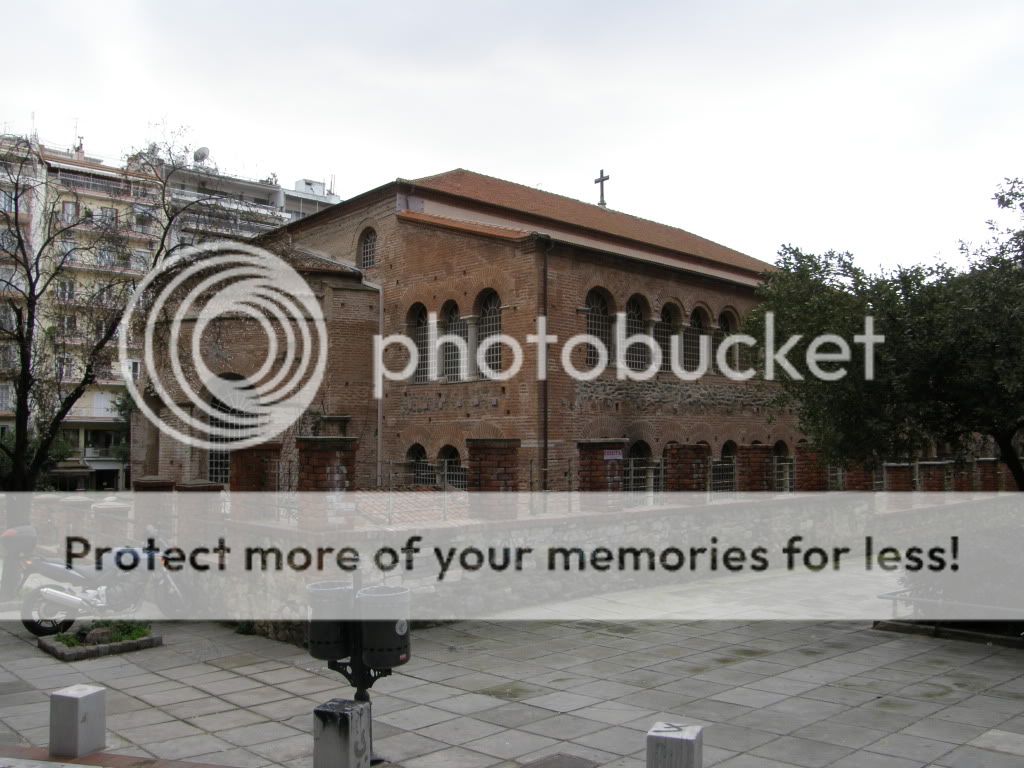
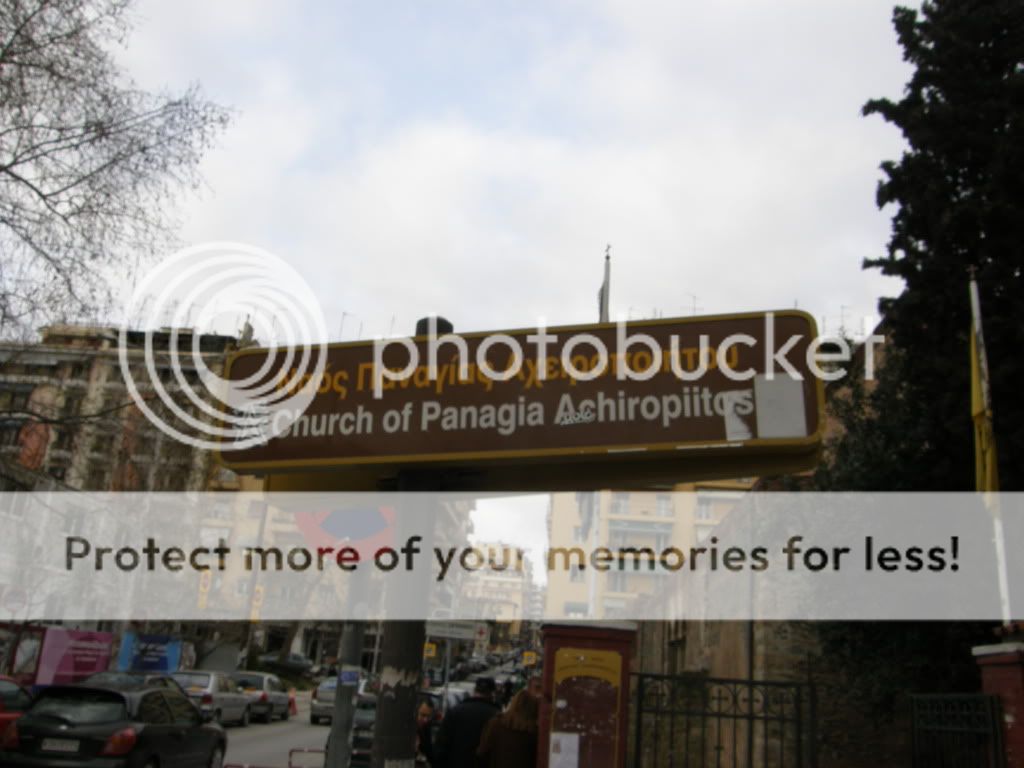
Thessalonike: Acheiropoiеtos Church (Greek: Ἀχειροποίητος; Non-Hand Made)

The photographs in this post are all originals. If they are useful, feel free to use them, but please reference them properly, preferably with a link back to this site! They were taken in March 2010.


Source for text: Greek Ministry of Culture

Στο κέντρο της Θεσσαλονίκης, επί της οδού Αγίας Σοφίας και βόρεια από τον ομώνυμο ναό σώζεται ο ναός της Αχειροποιήτου του οποίου η χρονολογία ανέγερσης τοποθετείται γύρω στα μέσα του 5ου αι. Το μνημείο υπέστει αρχιτεκτονικές επεμβάσεις ήδη από τον 7ο αιώνα, ενώ μια ακόμα σημαντική φάση επεμβάσεων χρονολογείται στα όψιμα βυζαντινά χρόνια (14-15ος αι.)

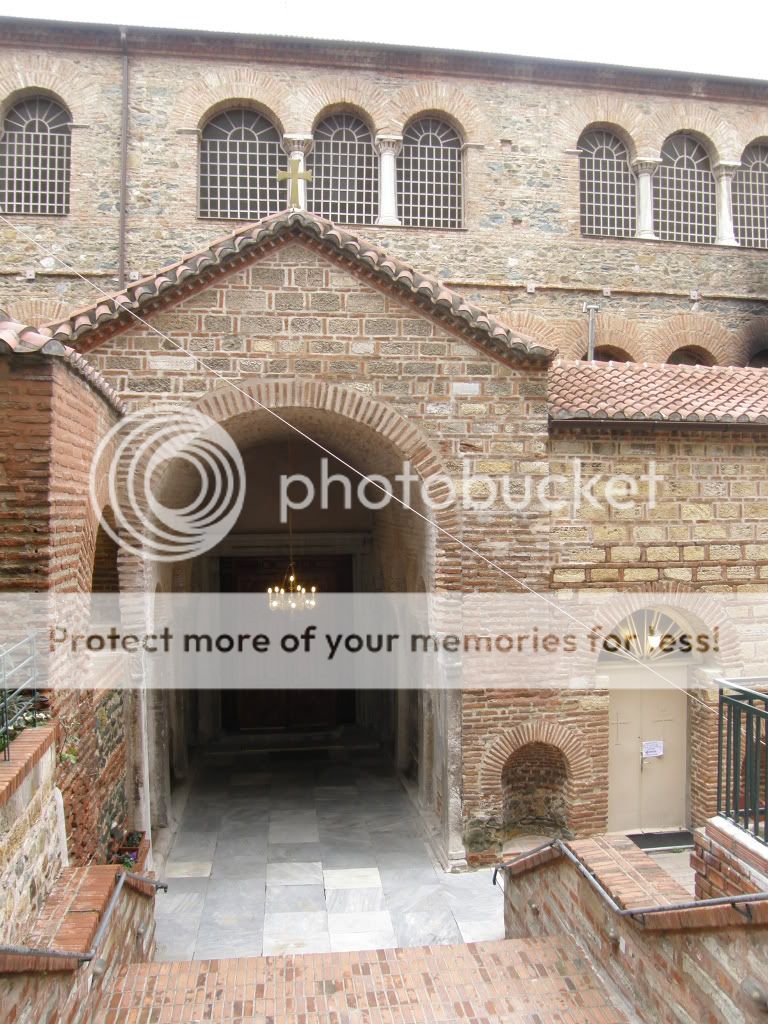
Η Αχειροποίητος εντάσσεται στον τύπο της τρίκλιτης ξυλόστεγης βασιλικής με υπερώα, η οποία καταλήγει στα ανατολικά σε ημικυκλική αψίδα. Στα δυτικά υπάρχει νάρθηκας, ενώ διασώζονται και ίχνη του εξωνάρθηκα. Τρίβηλο τοξωτό άνοιγμα αποτελεί τη κύρια είσοδο από τον νάρθηκα προς τον κυρίως ναό. Τα τρία κλίτη του κυρίως ναού χωρίζονται μεταξύ τους με κιονοστοιχίες. Το βόρειο κλίτος απολήγει στην ανατολική πλευρά του στο μεσοβυζαντινό παρεκκλήσι της Αγίας Ειρήνης. Στη βορειοδυτική γωνία της βασιλικής σώζεται το κλιμακοστάσιο που οδηγούσε στα υπερώα. Στην νότια πλευρά του ναού υπάρχει ένα μνημειακό πρόπυλο, το οποίο συνέδεε πιθανώς τη βασιλική με την κεντρική αρτηρία της βυζαντινής πόλης, την Λεωφόρο. Ένα πρόσκτισμα επίσης στη νότια πλευρά θεωρείται το βαπτιστήριο της βασιλικής.

Από τον πλούσιο γλυπτό αρχιτεκτονικό διάκοσμο της βασιλικής ξεχωρίζουν τα σύνθετα ιωνικά κιονόκρανα, τα οποία χρονολογούνται στα μέσα του 5ου αιώνα και αποτελούν προϊόντα των εργαστηρίων της Κωνσταντινούπολης, καθώς και οι κίονες του τριβήλου λαξευμένοι σε θεσσαλικό μάρμαρο (verde antico). Μεγάλες πλάκες προκονήσιου μαρμάρου καλύπτουν το δάπεδο του κεντρικού κλίτους. Από τα ψηφιδωτά του 5ου αι. έχουν διασωθεί λίγες διακοσμητικού χαρακτήρα παραστάσεις, οι οποίες διακρίνονται για την υψηλή ποιότητα εκτέλεσης. Συνθέσεις όπως αυτές που κοσμούν τα εσωρράχια των τόξων του τριβήλου χαρακτηρίζονται από την τάση απόδοσης ενός ειδυλλιακού κλίματος σε συνδυασμό με τον χριστιανικό συμβολισμό.

Οι λίγες τοιχογραφίες που σώζονται σε κακή κατάσταση στο νότιο κλίτος της βασιλικής χρονολογούνται στις πρώτες δεκαετίες του 13ου αιώνα. Οι στρατιωτικοί άγιοι που απεικονίζονται κατά παράταξη, ολόσωμες μορφές εναλλάσονται με μορφές σε προτομή, αποτελούν μέρος της παράστασης των Σαράντα Μαρτύρων της Σεβάστειας.

Ο χριστιανικός ναός κτίσθηκε πάνω στα ερείπια ένος ρωμαϊκού λουτρού, του οποίου αποκαλύφθηκαν τρία επάλληλα δάπεδα κάτω από το βόρειο κλίτος της βασιλικής. Η έκταση που καταλαμβάνουν τα ερείπια του λουτρώνα δείχνουν ότι επρόκειτο για ένα από τα σημαντικότερα δημόσια κτίρια της Θεσσαλονίκης. H βασιλική της Αχειροποιήτου κατέλαβε μόνο ένα τμήμα του προγενέστερου κτίσματος, ενώ το ανατολικό και βόρειο τμήμα του λουτρώνα παρέμεινε σε χρήση και μετά την ανέγερσή της.

Η βασιλική αναφέρεται στις γραπτές πηγές ως ο ναός της Παναγίας Θεοτόκου και μάλιστα ως ο μεγάλος ναός της Θεοτόκου. Η επωνυμία Αχειροποίητος μαρτυρείται για πρώτη φορά σε έγγραφο του 1320 και πρέπει να σχετίζεται με τη λατρευτική εικόνα της Παναγίας δεομένης που υπήρχε στο ναό. Η Αχειροποίητος είναι ο πρώτος χριστιανικός ναός που μετατράπηκε σε τζαμί αμέσως μετά την άλωση της πόλης στα 1430 από τον σουλτάνο Μουράτ, και παρέμεινε το επίσημο τέμενος των κατακτητών καθόλη την διάρκεια της τουρκοκρατίας, γνωστό με το όνομα 'Εσκι Τζαμί (Παλαιό Τζαμί).

Παρόλες τις ανακατασκευές που έχει υποστεί η Αχειροποίητος κατά την διάρκεια της μακρόχρονης ιστορίας της, το μνημείο συγκαταλέγεται σήμερα ανάμεσα στα καλύτερα διατηρημένα και πιο σημαντικά παράδειγματα της τυπικής ξυλόστεγης βασιλικής με υπερώα της πρωτοβυζαντινής περιόδου.

Translation/adaptation by Archaeology Matters:

In the centre of Thessalonike, on St. Sophia street and to the North of the church bearing that name, the Church of Acheiropoietos is to be found, whose construction is dated to the 5th century. The monument underwent a number of architectural interventions in the 7th century, while an important phase of interventions is dated to the late Byzantine period (14th-15th centuries).

The Acheiropoietos church belongs to the type of the three-aisle wood-roof Basilica with Hyperoa, ending on the east in a semi-circular apse. On the west a Narthex can be found, while trases of an exo-narthex can still be distinguished. A three lobed arched opening (trivilon) comprises the main entrance to the church from the Narthex. The three aisles of the main temple are separated by colonnades. The North Aisle ends on its East end in the Mid-Byzantine chapel of Saint Eirene. In the Northwest corner of the Basilica the stair that led to the Hyperoa can still be seen. On the South side of the church a monumental Propylon can be observed, which may have connected the Basilica with the central artery of the Byzantine city, the Leophoros. A secondary construction, also on the southern side, is considered to have been the Baptestirion of the Basilica.

Of the rich architectural sculpture of the Basilica the Ionian Capitals stand out, dated to the mid 5th century, being the product of Constantinopolitan workshops; the columns of the trivilon are worked in thessalian marble (verde antico). Larges plaques of marbles from Prokonisos cover the floor of the central aisle. Little is preserved of the 5th century decorative mosaics, of high quality execution. Compositions such as those that cover the interior of the arches of the trivilon are characterised by the depiction of idyllic atmosphere combined with Christian symbolism.

The few frescoes remaining in the south aisle are in bad shape. They are dated to the first decades of the 13th century. The military saints shown in rank, whole-body depictions alternating with busts, are part of the Forty Martyrs of Sebasteia scene.

The Christian temple was built on the ruins of a Roman bath, of which three succeeding floors were discovered under the Northern Aisle of the Basilica. The size of the remains of the Bath show that it was part of one of the most important public buildings of Thessalonike. The Basilica of Acheiropoietos covered only part of the older building, while the eastern and northern parts of the Baths remained in use after the building of the Basilica.

the Basilica is referred to in written sources as the Temple of the Virgin Mother of God (Panagia Theotokos) and, more precisely as the great temple of the Virgin Mother of God. The name Acheiropoietos [Non-Hand Made. It is a term applied usually to icons that appear miraculously and are thus not human creations] is found for the first time in a document of 1320 and must be related to the worship icon of the Virgin Suppliant that was kept is the church. Acheiropoietos is the first Christian Temple that was transformed into a Mosque immediately after the city was taken in 1430 by the Sultan Murat, and remained the main shrine of the conquerors throughout the whole Turkish period, know as the name Eski Cami ('Εσκι Τζαμί [Old Mosque]).

Despite all the remodelling that the monument underwent throughout its long history, its is counted amongst the best preserved examples and most important examples of a typical wood-roof Basilica with Hyperoa of the Early Byzantine period.


Non-Hand Made cheese pies, just across from the church... Do micacles still happen or do Greeks have a sense of humour?


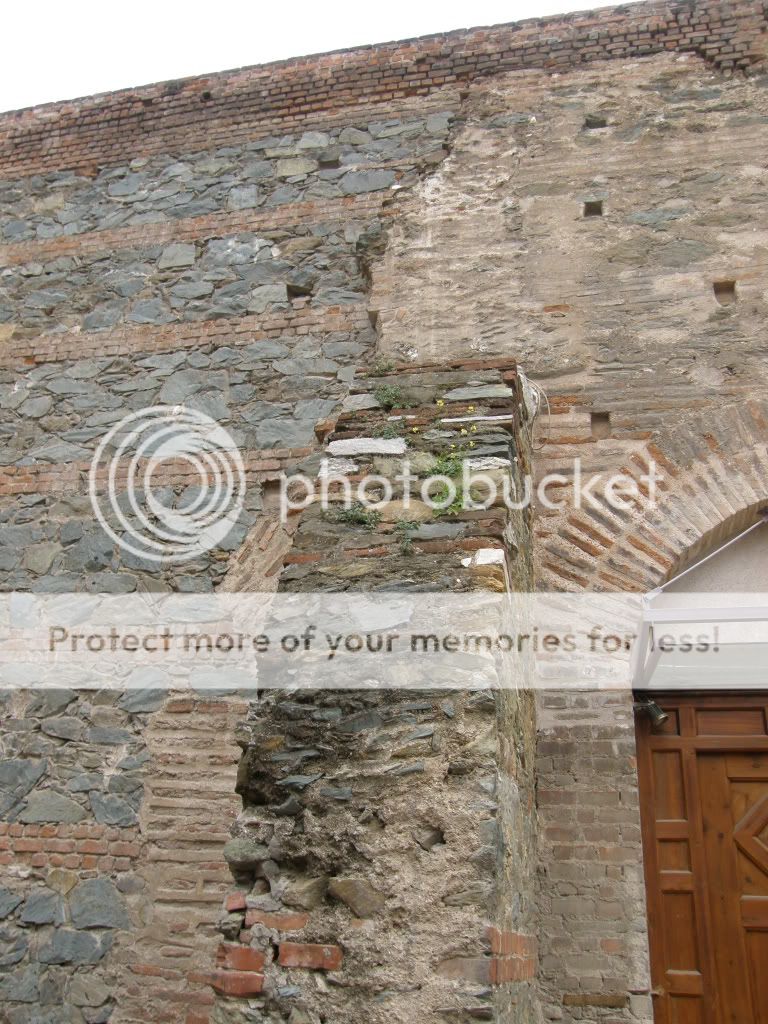
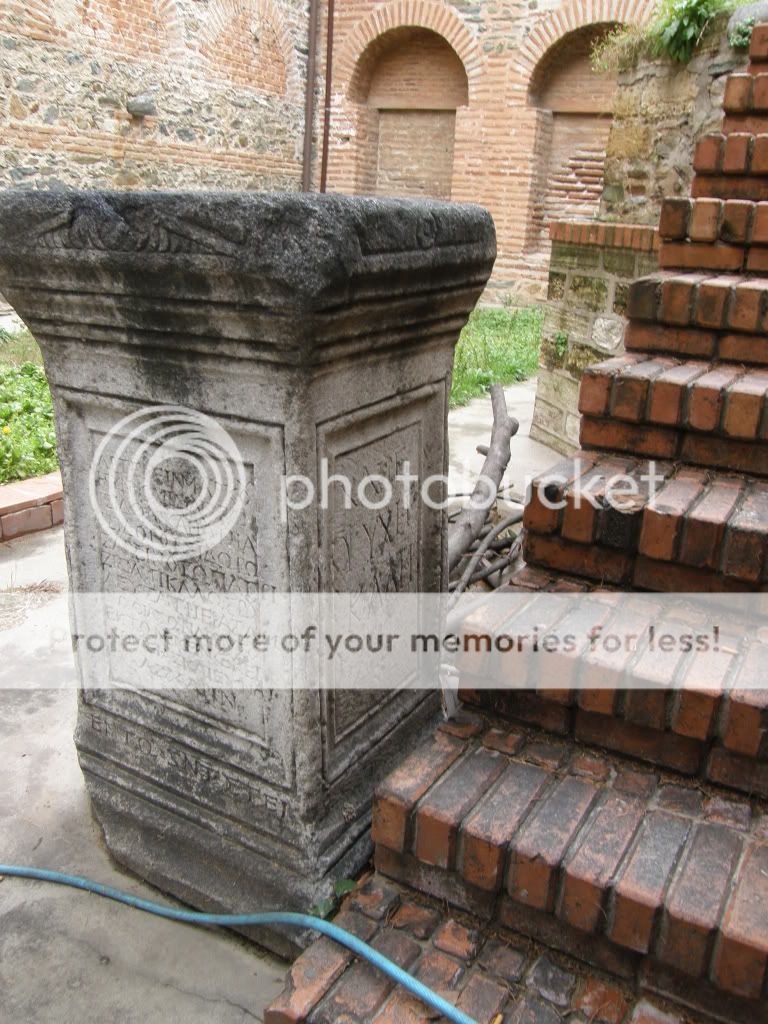
Note the difference of the level between the Byzantine City and today...The same holds true for most parts of the town.


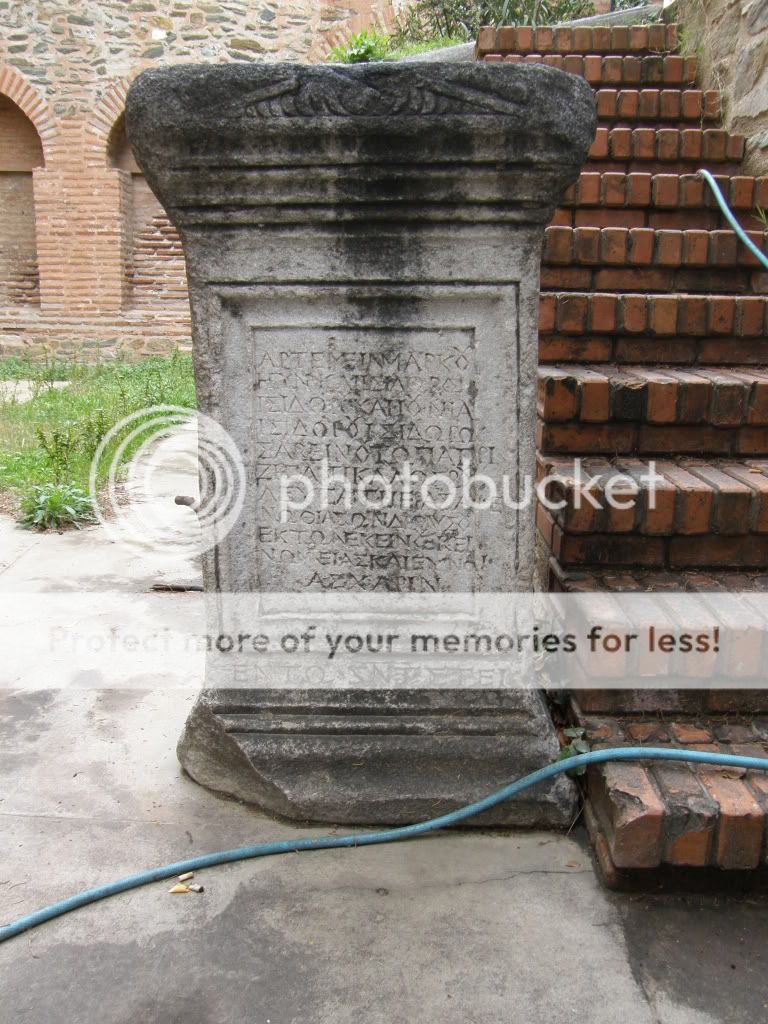
If anyone has the correct IG reference for this inscription I would appreciate it! - I don't have time to look it up myself...

A cursory glance at this [easy to read] inscription gives:

ΑΡΤΕΜΕΙΝΜΑΡΚΟΥ

ΗΓΥΝΗΚΑΙΙΣΙΔΩΡΟΣ

ΙΣΙΔΩΡΟΥΚΑΙΙΟΥΝΙΑ

ΙΣΙΔΩΡΟΥΙΣΙΔΩΡΩ

ΣΑΡΕΙΝΟΤΩΠΑΤΡΙ

ΖΗΣΑΝΤΙΚΑΛΩΣΒΟΥ

ΛΕΥΣΑΝΤΙΙΕΡΑΣΑΜΕ

ΝΩΘΙΑΣΩΝΔΙΟΝΥΣΟ

ΕΚΤΩΝΕΚΕΙΝΟΥΣΚΕΙ

ΝΩΜΝΕΙΑΣΚΑΙΕΥΝΟΙ

ΑΣΧΑΡΙΝ


ΕΝΤΩ•ΖΝΤΣΤΕΙ


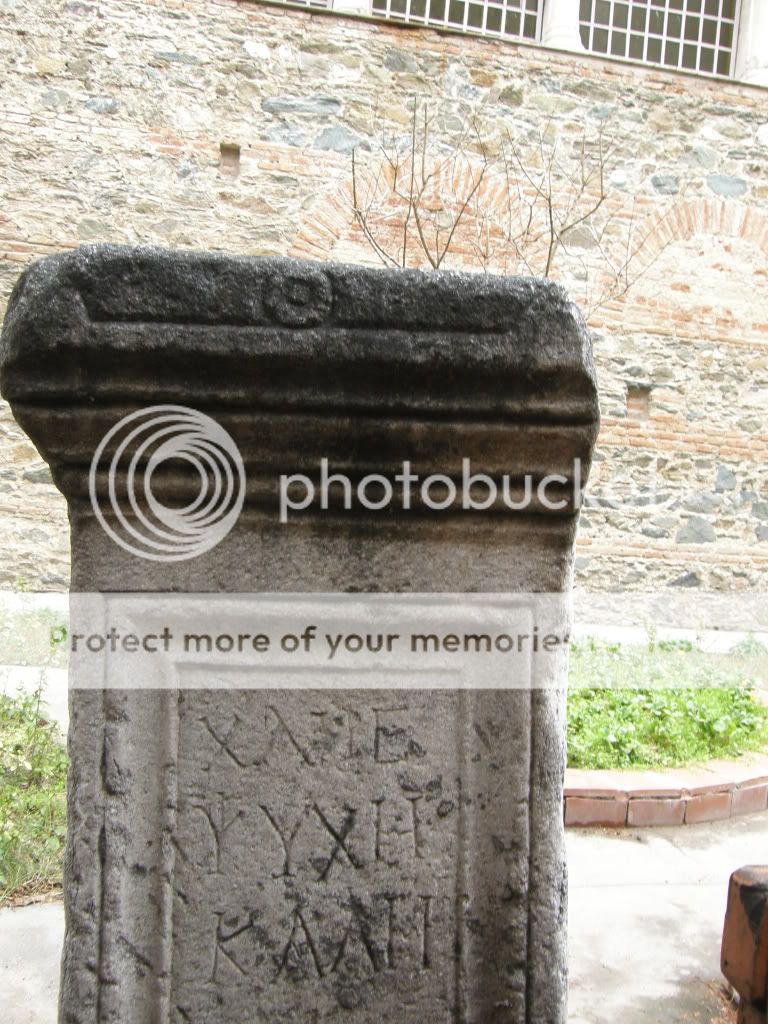
Secondary Side


ΧΑΙΡΕ

ΨΥΧΗ

ΚΑΛΗ