ANNUAL OPEN MEETING OF THE
BRITISH SCHOOL IN ATHENS (
23.02.2010)
Researches on the hill of Kefalas (Κεφαλάς) of
Knossos revealed findings from the
most ancient rural habitation in Greece and maybe in Europe, dated between 7000 and 6400 B.C. The finds were presented by the director of the British School in Athens, Professor
Catherine Morgan during the annual open meeting of the School in the building of the Archaeological Society.
The discovery was made using high technology radars and working with Dutch scientists during research which had started in May 2009 aiming to map and visualise archaeological and geological remains in the Knossos region.
Professor Morgan also presented the finds from similar research conducted on the isle of
Keros in the Cyclades and more precisely on the
Dhaskalio settlement which flourished during the early Bronze Age (see
Keros Cambridge Project), on Kavos of Kerkyra (Corfu), in Thessaly, on Kythera and Antikythera.
Professor Morgan also spoke of the archaeological research conducted on the island of Aigina, where, as she noted, the making of clay vessels flourished from the Bronze Age till the 1960’s because of the natural resources and the commercial potential of the island. Today only a single family continues this five millennia-old tradition.
The Professor of History of Art of the University of Londor, Robin Cormack was the guest of honour. Professor Cormack spoke on the influence of Byzantium on the culture of the British Empire (“Byzantium in the British Empire: the architects of the Byzantine Research Fund overseas”). As an example he used
Walter Sykes George, who worked between 1906 and 1911 for the British School in Athens and participated in digs and the restoration of ancient and byzantine monuments in Greece.
Sykes was one of the designers of the city of New Delhi and was especially influenced by Byzantine Architecture and his whole experience in Greece.
Mr Cormack also spoke of
Robert Weir Schultz and his colleague and co-worker
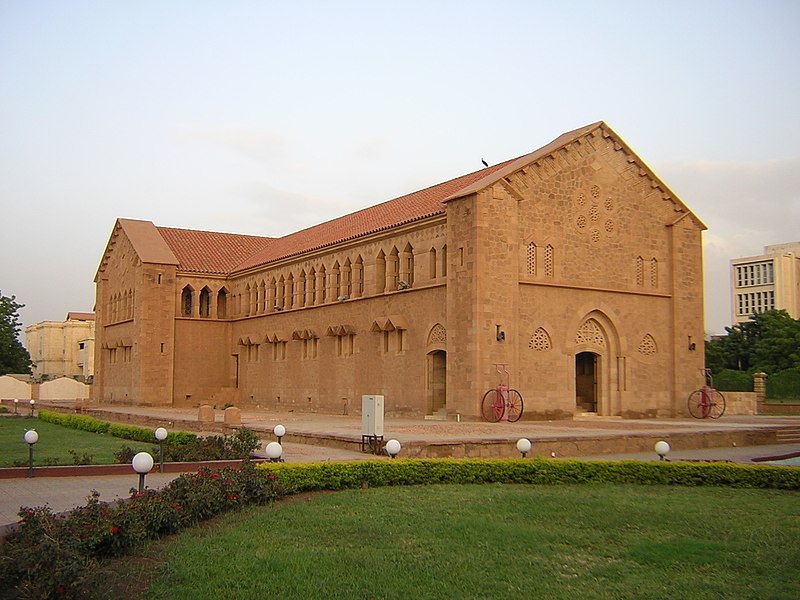
Sidney Barnsley, who both came to Greece with a scholarship for Byzantine studies. Schultz, deeply influences by his studies in Greece built the Cathedral of Hartoum in Sudan following the plan of Ag. Demetrios in Thesalonike.
 The Byzantine church of Hagios Demetrios in Thessalonike.
 The Anglican Cathedral in Khartoum, now the Republican Palace Museum. The original plan included a belfry which was later demolished.
 The Anglican Cathedral in Khartoum, now the Republican Palace Museum.Source for the article: Kathimerini.gr
Sources for the images:
- Ag. Demetrios, Thessalonike from
http://dreamthessaloniki.blogspot.com/2007_05_01_archive.html- Khartoum Cathedral (Republican Palace Museum):
a.
http://bmtrainingprog.wordpress.com/2010/02/12/the-republican-palace-museum-khartoum-sudan-a-blog-post-by-nasir/b.
http://commons.wikimedia.org/wiki/File:Republican_Palace_Museum_%28Khartoum%29_002.jpg